


20 in stock
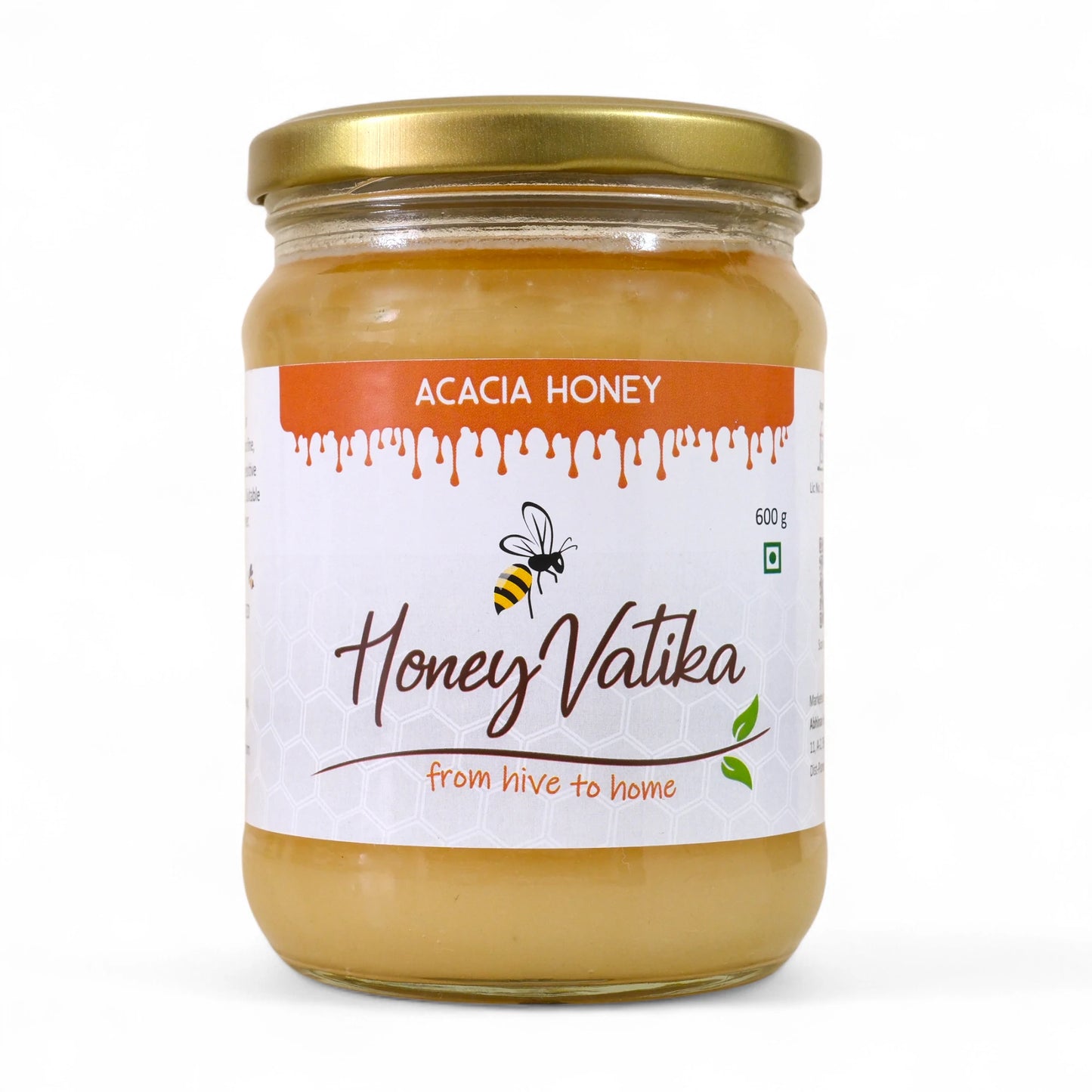
Acacia Honey
Acacia Honey
Abhinav Honeybee Farm
Couldn't load pickup availability
Produced from the blossoms of the babul tree (Acacia nilotica), one of India's most widespread native flowering trees, this is a warm amber honey with a mildly sweet flavor and a subtle earthy undertone.
Source: Collected from babul tree groves across Rajasthan, Gujarat, and Madhya Pradesh

Consumption & Benefits
Benefits
Who Can Consume
How to Consume
F.A.Q.
If honey doesn’t expire, why is there an expiry date on the label?
While pure honey is naturally shelf-stable and doesn't actually expire, FSSAI regulations mandate that an expiry date be mentioned on all packaged food products in India.
We provide a "Best Before" date to comply with these legal standards, but as long as your honey is kept moisture-free and sealed, it remains safe to consume long after that date.
Does your honey contain any added sugar or preservatives?
Not a single drop. Our honey is 100% pure nectar.
The natural high sugar content and low moisture of honey act as its own preservative, so we never need to add chemicals or stabilizers.
Why has my honey become thick or solid (crystallized)?
Crystallization is a natural process and a sign of pure, raw honey. It happens when the natural sugars (glucose and fructose) bind together.
To make it liquid again, simply place the jar in a bowl of warm water (not boiling) for a few minutes.
Never microwave raw honey, as high heat destroys its healthy enzymes.
Is it safe for infants to consume?
Honey should never be given to infants under 12 months of age.
This is due to the risk of infant botulism, as their digestive systems are not yet developed enough to handle natural spores found in raw honey.
For children over 1 year and adults, it is perfectly safe and highly beneficial.